Knitted vest for children
5,36 €
In this pattern, you get a vest in size 0-5 years. The vest is knitted in the delicious Mayflower “Easy Care – tweed” needle on 3.5 mm needles Super nice yarn for both children and adults – and the tweed version just gives that little spice, if you ask me. Super nice yarn, which is also available without “tweed”. (Be careful when buying yarn. It is also available in an “Easy Care Classic, which is for 4mm needles – just so you don’t make a mistake and buy the wrong one).
The model is knitted from the bottom up. First, work the front and back pieces simultaneously on circular needles. Then cast off for armholes – and now finish the back and front separately – work back and forth.
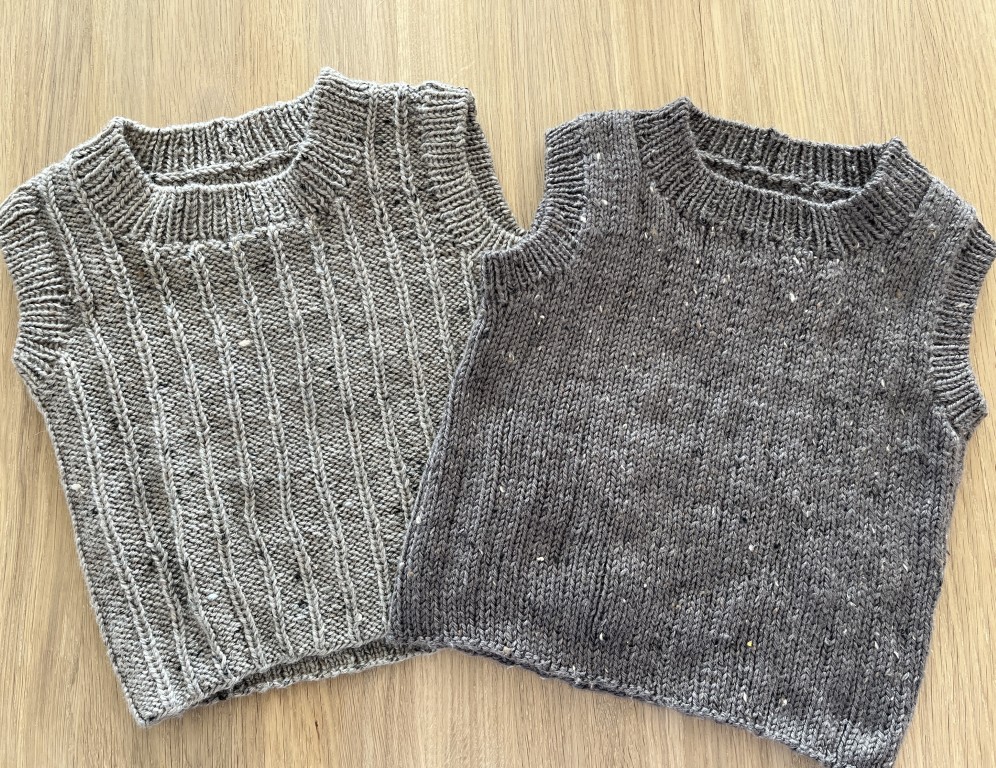
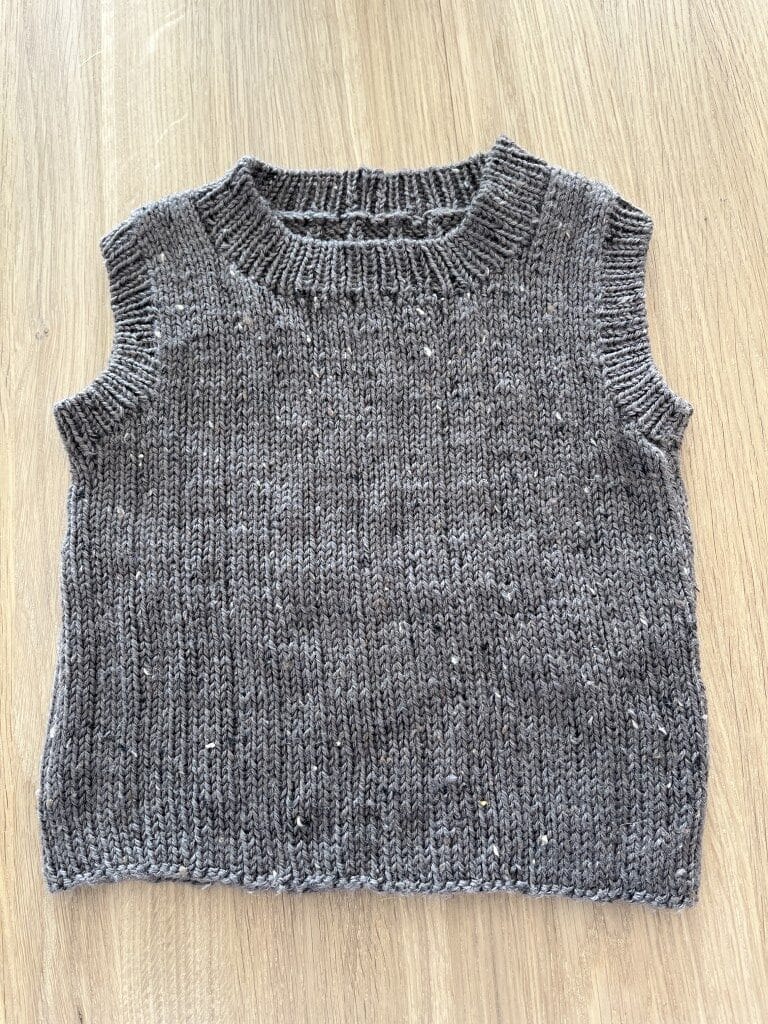
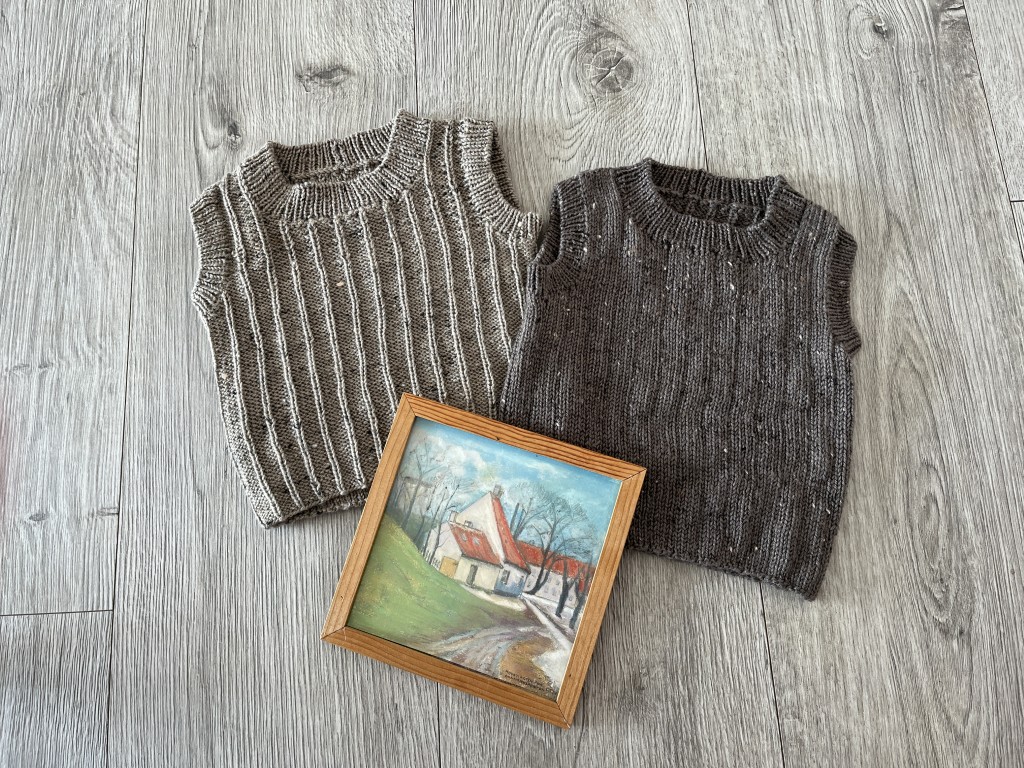
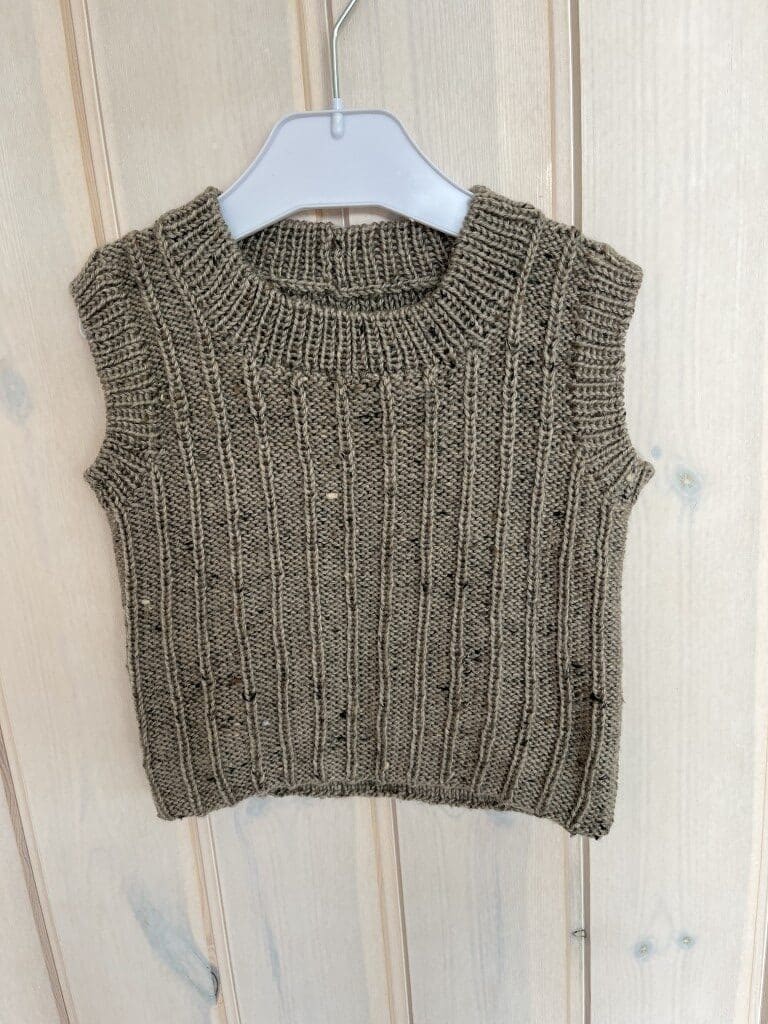
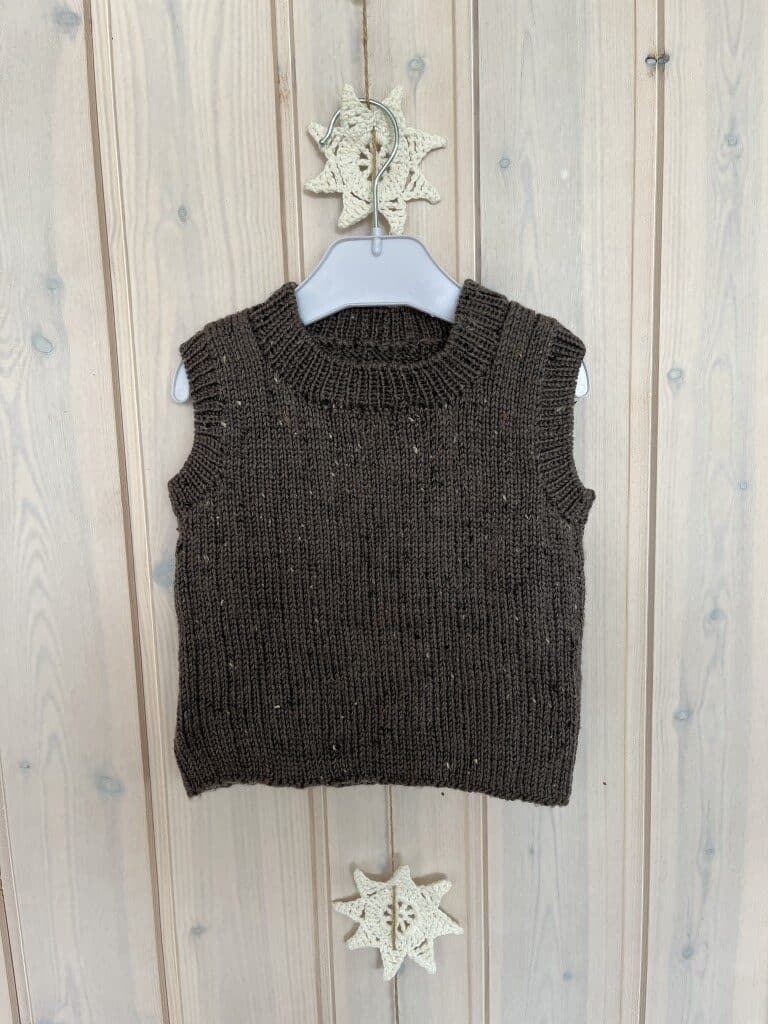
Depending on which side you face as the right side of your work, the vest will have a different look, as the front and back are very different in structure. The vest has no ribbed hem – but there is ribbed trim in the neck and armholes, which are closed off with Italian closure. You can also shut off regular if you like it better. But I think that the Italian closure gives a nice finish – and then it is also a little more elastic.
Size:
2-4 months (5-9 months) 12 months (2 years) 3-4 years (4-5 years)
I recommend that you measure your child before knitting, so you get the size you want. There can be a big difference between children and goals at the above ages.
Stick: 3.5 mm, circular needle size 40 cm. Double pointed needles 3 mm for ribbed neckline and armholes. You can also use a long circular needle size 3 mm for edges if you use the “magic loop” technique instead of double pointed needles.
Gauge: 28 stitches = 10 cm in width (textured pattern)
Always make sure that the gauge fits so that you get the right measurement for the work. Make a gauge swatch.
Bust circumference: 50 (54) 57 (60) 64 (64) cm
Length: 28 (31) 33 (35) 37 (39) cm. Can be extended/shortened if you wish. Measure your child and take into account any additional use of yarn. If you want to lengthen/shorten the vest, then it must be done BEFORE you close off for armholes.
Yarn Consumption: 150 (150) 150-200 (200) 250 (250) grams. Easy Care Tweed from Mayflower. Running length is 185 meters / 50 grams.
Description
The following is a general text about knitting and knitted vests. To get the exact product description, read above – where you get a precise description of the knitting pattern. To complete the purchase, you must add the item to the basket and complete the payment – then the pattern will be sent to you as a PDF file in your mailbox.
Knitted vest for children – a timeless classic
A knitted vest is a popular choice when it comes to children’s clothing, and there are many good reasons for that. It’s practical, warm and versatile, and it’s fun to make yourself. More and more people are choosing to knit their own children’s clothes, and here a knitted vest is an obvious beginner’s project.
A knitted vest for children can be made in countless variations – with different patterns, colors and yarn types. Whether you’re a beginner or a seasoned knitter, there’s a pattern that’s right for you.
In this article, we’ll dive into why a knitted vest is an ideal project, what materials you can use, and how to find the right pattern.
Why choose a knitted vest for children
A knitted vest is both practical and stylish. It keeps your child warm without being too heavy or bulky. Perfect for transitional periods like spring and fall, when a sweater can be too warm but a t-shirt too cold.
Provides freedom of movement
Unlike thick sweaters, a knitted vest gives children the freedom to move. They can play, crawl and run without being restricted in their arms, making it ideal for active children of all ages.
Layering is smart
Another advantage of a knitted vest is that it fits perfectly into a layered outfit. Wear it over a long-sleeved blouse or under a jacket. It adds both warmth and style without overheating.
Timeless design
A knitted vest never goes out of style. It is a classic piece of clothing that suits both girls and boys, and can be adapted to the season and personal style. With the right pattern, you can create a unique and durable piece of clothing that can be passed down.
Find the right pattern
There are many patterns for knitted vests, but it can be difficult to choose the right one – especially if you are new to knitting.
Select by level
If you are a beginner, you should choose a simple recipe with few details and without advanced techniques. A basic pattern for a knitted vest in stockinette stitch or rib is a good place to start. Advanced knitters can throw themselves into patterns with cables, lace patterns or multi-coloured knitting.
Size and fit
When choosing a recipe, you also need to think about what size you need. Many recipes contain sizes from 1 year up to 10 years or more. A good recipe will give you measurements and guidance in relation to the child’s age and height.
Adapt to your child’s needs
A recipe is just a guide. You can easily change details, such as length, colors or pattern, so that the knitted vest fits your child perfectly. It is precisely this personal touch that makes homemade clothes so special.
Choice of material for a knitted vest
The choice of yarn is of great importance for both comfort and durability. When knitting for children, you should choose yarn that is soft, breathable and easy to wash.
Wool or cotton?
Wool is warm and elastic and suitable for winter use. Many modern wool yarns are machine washable, making them more practical for children’s clothing. Cotton, on the other hand, is lighter and perfect for spring and summer. If you want to use the vest all year round, a mix of wool and cotton can be a good compromise.
Check the yarn’s gauge
Always follow the pattern’s recommendation for gauge so that your knitted vest gets the right measurements. Use the recommended needle size and make a gauge swatch before you start.
How to knit a vest for children
Knitting a vest for children does not necessarily require many hours of work, and it can be both enjoyable and satisfying to see the project take shape.
Classic approach
A typical knitted vest consists of a back piece and a front piece, which are knitted separately and then sewn together at the shoulders and sides. Some patterns are knitted in the round without sewing together, which makes it easier to avoid visible seams.
Use circular sticks
Many people prefer to use circular needles, even for back-and-forth knitting, as it is easier to keep the stitches together and provides a more ergonomic working position.
Neck and sleeve cuffs
Finish your knitted vest with a nice ribbed neckline and armholes. It gives a nice and finished look and helps to keep the shape.
Good advice for knitting a vest for children
When you start knitting a vest, there are some things that can make the process easier and the result better.
Wash before use
Even if you use soft yarn, it can be a good idea to wash the finished knitted vest before the child uses it. It removes excess fibers and makes the vest even more comfortable.
Knit well in advance
A knitted vest can take anywhere from a few evenings to several weeks to complete, depending on the complexity and how much time you have. It’s better to knit a little too big than too small so that the child can grow in it.
Use yarn scraps for details
If you have yarn to spare, you can knit small details such as pockets, stripes or buttons in contrasting colours. It gives your knitted vest a personal and fun touch.
Knitted vest as a gift idea
A handmade knitted vest is a great gift idea for kids. It signals consideration and personality, and it is both practical and beautiful.
For birthdays and holidays
Give a knitted vest as a gift for a birthday, Christmas or as a christening gift. Combine it with a small pattern so that the recipient can learn how to knit a vest themselves – perhaps for siblings or dolls.
Make a long-lasting vest
By choosing timeless colors and classic cuts, a knitted vest can be used again and again – even by little siblings. It is sustainable and economical.
Closing thoughts
A knitted vest for children is much more than just a piece of clothing. It’s a creative project, a personal gift, and a warm friend through the chilly days of the year. With the right pattern and a little patience, you can create something that not only looks good, but also feels good – both for the child wearing it and for you who knitted it.
Whether you’re a beginner or experienced, there are always new variations and techniques to learn. And with every knitted vest, you’ll get a little better – and your child a little warmer.